
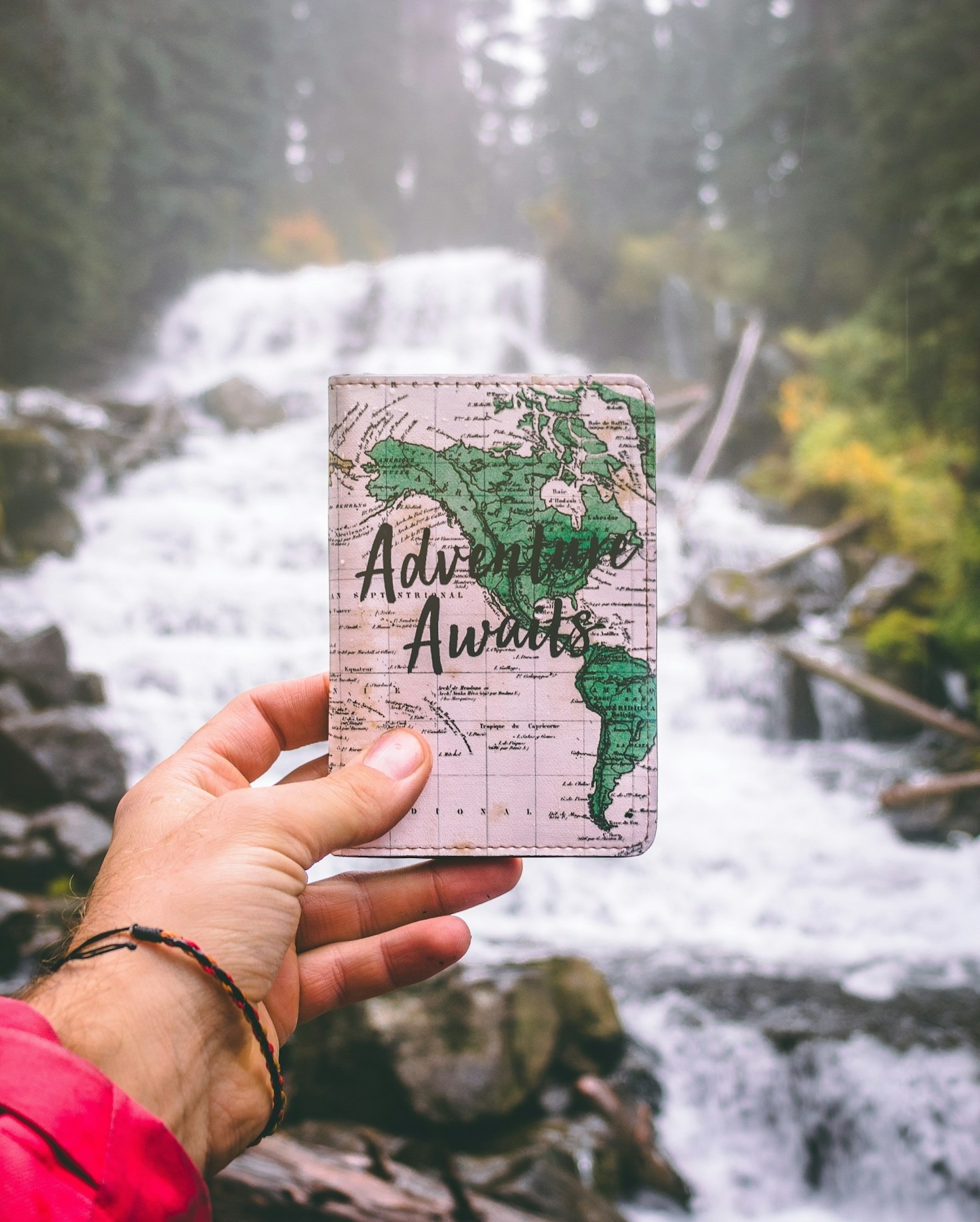
Most travel begins with a place.
Paris.
Tokyo.
Mexico City.
Iceland.
A name appears on a map, and the journey begins to form around it.
Flights are searched. Hotels are compared. Lists are made. Museums, restaurants, neighbourhoods, viewpoints.
There is nothing wrong with travelling this way.
But there is another way to begin.
Instead of asking:
Where do I want to go?
Ask:
What story do I want to enter?
That small change can completely transform the way we travel.
A Destination Is a Place. A Story Is a Reason.
A destination tells you where you are going.
A story tells you why.
You can visit Shanghai because it is an extraordinary city.
Or you can visit Shanghai because you want to understand what it felt like to move through the city in the 1930s, when diplomats, journalists, criminals, spies and refugees crossed paths in one of the most complicated cities in the world.
The streets may be the same.
The journey is not.
A story gives a place context.
Suddenly a building is no longer just beautiful architecture.
A railway station is no longer simply a station.
A hotel lobby, a harbour, a café or an ordinary street may become part of something larger.
You are no longer just looking at a place.
You are looking for traces.
Stories Make Us Pay Attention
Destinations often come with checklists.
See this.
Photograph that.
Eat here.
Walk there.
A story changes the way we look.
Instead of asking whether we have seen the most famous monument, we start noticing details.
Why was this street important?
Who lived in this building?
What happened in this square?
Why did people leave from this harbour?
What did this neighbourhood look like fifty or a hundred years ago?
Travel becomes less about collecting sights and more about understanding connections.
And once you start travelling this way, even ordinary places become interesting.
The Famous Sight Is Not Always the Most Important Place
Travel has become increasingly concentrated around landmarks.
We travel thousands of kilometres and then stand in exactly the same places as everyone else.
The Eiffel Tower.
Times Square.
Shibuya Crossing.
The Colosseum.
They are famous for good reasons.
But the most meaningful place in a story may be somewhere completely different.
A small apartment.
An abandoned railway line.
A forgotten hotel.
A village outside the city.
A café where two people once met.
A road through the mountains.
Stories create their own geography.
And that geography does not always match the tourist map.
Stories Connect Places That Seem Unrelated
A destination usually creates borders.
You travel to a country, a city or a region.
Stories are less obedient.
They cross borders.
The story of an explorer may begin in Europe, continue across an ocean and end in a remote village thousands of kilometres away.
The story of a musician may connect London, New York, Berlin and Los Angeles.
The story of espionage may move between railway stations, embassies, hotels and ports across several countries.
Once the story becomes the centre of the journey, geography becomes flexible.
The route exists because the narrative requires it.
Not because a guidebook says those places belong together.
History Stops Being Something You Read
There is a difference between reading that something happened and standing where it happened.
A date in a book is abstract.
A place is physical.
You can see the distance between two buildings.
You can walk the road someone walked.
You can understand why a harbour mattered.
You can see the mountains that made an escape difficult or the river that made a city powerful.
Travel gives history scale.
Suddenly events that seemed remote become human.
They happened here.
Someone stood here.
Someone waited here.
Someone made a decision here.
That sensation can be far more powerful than simply visiting another attraction.
Stories Create Better Memories
Ask someone about a trip they took ten years ago and they may struggle to remember exactly which churches or museums they visited.
But they often remember the story.
The night they got lost.
The person they met on a train.
The abandoned building they searched for.
The strange hotel connected to an old mystery.
The road they followed because someone had travelled it decades earlier.
Human memory works remarkably well through narrative.
We remember beginnings, surprises, characters, conflicts and discoveries.
A journey built around a story already has that structure.
It becomes easier to remember because it meant something while you were living it.
You Become Part of the Journey
Traditional tourism can sometimes make us observers.
We arrive.
We look.
We photograph.
We leave.
A story invites participation.
You begin searching.
Comparing the past with the present.
Following clues.
Reading letters.
Talking to people.
Finding places that are not necessarily marked on any tourist map.
The traveller becomes curious again.
And curiosity is perhaps the most important difference between travelling and simply being somewhere else.
Stories Can Be Personal
Not every journey has to follow a famous historical event.
Some of the most powerful stories are private.
Where did your grandparents come from?
Where did your parents meet?
Where did the writer who changed your life live?
Where was your favourite album recorded?
Where did a childhood photograph come from?
A journey can begin with a family letter, an old photograph, a novel, a song or even a question you have carried for years.
The destination comes later.
First comes the reason.
A Story Changes the Question
The traditional travel question is:
Where should I go next?
There is nothing wrong with it.
But perhaps there is a more interesting question:
What would I like to understand, follow, discover or experience?
Maybe you want to follow the world of spies in 1930s Shanghai.
Maybe you want to understand Japan at the end of the 1980s.
Maybe you want to trace an explorer’s route.
Maybe you want to follow the life of an artist through the cities that shaped them.
Once you know the story, the destinations begin to reveal themselves.
Sometimes they will be famous.
Sometimes they will not.
That is exactly the point.
The Destination Is Only the Stage
Places matter enormously.
But a place becomes more powerful when we understand what happened there.
A city is not only architecture.
A landscape is not only scenery.
A hotel is not only a building.
A road is not only a way of getting somewhere.
Every place contains layers of human experience.
Love.
Ambition.
Conflict.
Discovery.
Failure.
Escape.
Adventure.
Memory.
Travel becomes richer when we start looking for those layers.
So perhaps the next time you plan a journey, do not begin with a map.
Begin with a story.
Then find the places where it happened.
Because sometimes the best journeys do not begin with where.
They begin with why.
Lascia un commento